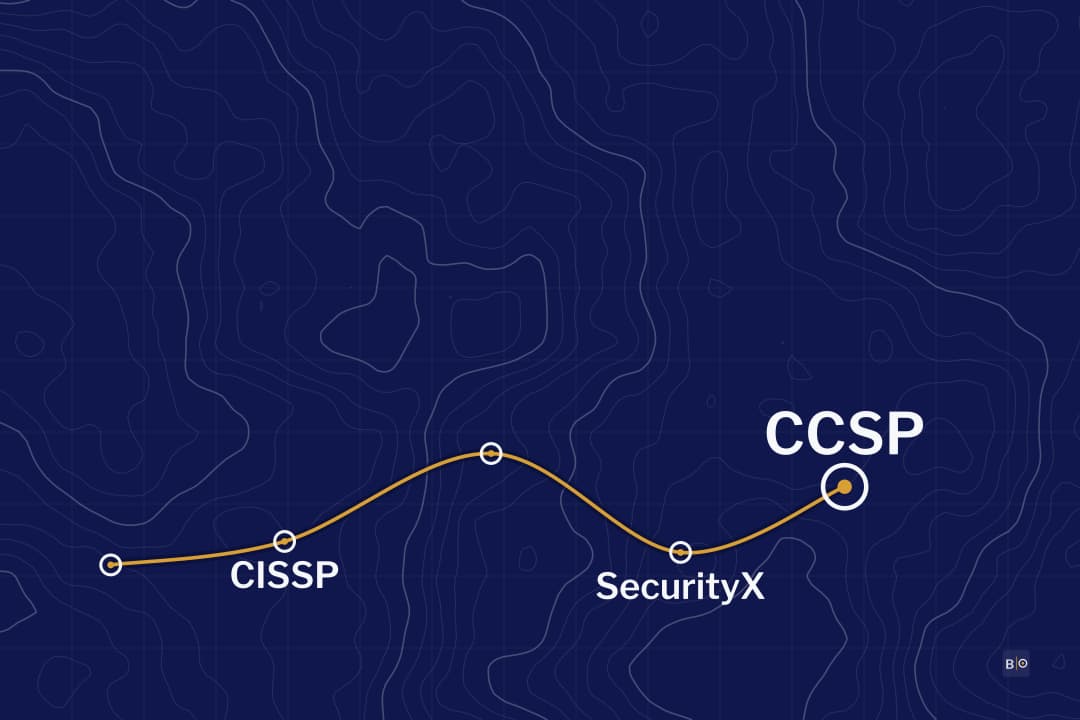
An analyst knows which controls fail during an incident. An architect has to decide what should replace them, who will operate the replacement and which risk the organization will keep. The move becomes credible when you can carry one design from a business requirement through review and into production. There is no source-backed three-year schedule for that transition, so this route uses evidence of readiness instead.
Start with the design problem inside your investigations
Pick an incident whose root cause was architectural: a service account with broad access, a flat network or an application that logs too little to investigate. Follow it past containment. Find out why the system was built that way, which constraint still applies and who can authorize a change. An analyst's incident timeline can become the starting point for a design review if it explains what the controls were supposed to achieve.
NIST's NICE Workforce Framework describes Cybersecurity Architecture separately from Defensive Cybersecurity. The architecture role concerns security requirements and their integration into systems and enterprise designs. Those responsibilities can sit inside an engineering job as well as a job with architect in its title. Look for the work before applying for the title.
Ask to attend a review where engineers disagree. Listen for availability requirements, integration costs, recovery needs and the people who inherit the support queue. Keep a record of how the decision was made. The record is useful when you later explain why your technically strongest option was too expensive or difficult to operate.
Build an architecture packet that another team can use
For a practice project, redesign access to a small internal application. Draw the users, identities, data flows and trust boundaries. Record the business requirement and assumptions, then compare feasible approaches. Your packet should let an engineer understand the proposed change without sitting beside you.
NIST SP 800-160 Volume 1 Revision 1 treats security as part of systems engineering across the lifecycle. Use that perspective to connect the diagram to implementation and operation. Decide how credentials are issued and revoked, which events are logged, how administrators recover access, and how someone tests that the requirements still hold after a change.
Write down the alternative you rejected and the condition that would make you reconsider it. A managed identity may suit one workload while a legacy integration forces another arrangement. Explaining that boundary is stronger evidence of judgment than drawing every control you know on a diagram. Have an engineer who did not help you prepare the packet review it, and repair the sections that need spoken explanation.
Choose a broad exam after the work starts crossing domains
CISSP fits when investigations have led you into network design, identity, software delivery and risk discussions. ISC2 requires five years of qualifying work across at least two domains, with a maximum one-year waiver through a relevant degree or an approved credential. Passing early lets you apply for Associate of ISC2 status while completing the experience requirements. It does not make you a certified CISSP.
SecurityX is the more engineering-oriented alternative. CompTIA recommends ten years in IT, including five in hands-on security, but imposes no formal experience prerequisite. Its scenario and performance-based format is useful if your gap is selecting and troubleshooting controls. Neither exam grades the architecture packet you created, so keep the project as separate evidence.
We would choose the exam whose outline exposes the larger gap in your current work. An analyst who already configures systems but struggles with risk ownership may benefit more from CISSP study. Someone comfortable with policy who rarely diagnoses a broken trust relationship may need the engineering work SecurityX emphasizes. Our SSCP and SecurityX comparison provides context for the earlier stages.
Specialize only after you understand the operating environment
Cloud architecture brings provider contracts and data-handling questions alongside implementation. CCSP fits that work, with domains covering cloud architecture, data, infrastructure, applications, operations, and legal and compliance matters. ISC2 normally requires five years in IT, including three in cybersecurity and one in a CCSP domain. An active CISSP can satisfy the entire CCSP experience requirement.
That waiver can make CISSP followed by CCSP a sensible sequence, but it adds an exam. Someone who already meets the cloud experience requirement can go straight to CCSP. A provider credential can be more useful sooner if the immediate job is building a secure environment on one platform; our cloud engineering path describes that choice.
Avoid buying an advanced certification simply because its name contains architect. Read the intended audience, experience requirements and examination objectives. Then compare them with the next system you will actually design. The useful specialization is the one you can apply, review and revise at work while you study.
Move from helping with reviews to owning one
The next stage is a bounded design that has a sponsor, implementation team and acceptance criteria. Volunteer to own the security portion of a change such as centralizing application authentication or separating administrative access. Agree on the scope before doing the drawings, and ask who will decide if security and delivery requirements conflict.
Carry the decision through testing and handover. Check whether the logs answer the investigation questions that started the project. Have the operating team try the recovery procedure. Record exceptions with an owner and review condition rather than quietly leaving them out of the final diagram.
You are ready to apply for architecture work when you can explain the decision, show the implemented controls and describe what changed after feedback. Ask interviewers how their architects interact with engineering and operations. A role devoted to document approval has different demands from one responsible for implementation. The project evidence helps you choose as well as helping the employer assess you.
Our view
We would prioritize a reviewed, implemented design over collecting both CISSP and SecurityX before applying. A broad credential can establish eligibility and shared vocabulary; the design packet shows how you use them. Stay close to operations after moving into architecture, because incidents and support problems reveal whether a design survived contact with the system. If your current employer will let you own that feedback loop, it may offer a better first architecture opportunity than a more impressive title elsewhere.
Sources
- NICE Cybersecurity Architecture: role responsibilities, checked October 2026
- NIST secure systems engineering: security across system lifecycle, checked October 2026
- ISC2 CISSP experience: experience and maximum waiver, checked October 2026
- CompTIA SecurityX: format and recommended experience, checked October 2026
- ISC2 CCSP experience: experience and CISSP substitution, checked October 2026