A DevSecOps engineer needs to explain what happens between a code change and the running service, including who can alter that path. Start by owning a small delivery pipeline, then add security checks whose failures someone can diagnose and repair. The certification choice follows the environment: secure software lifecycle work, Kubernetes administration or a particular cloud platform. There is no single exam that replaces all of those foundations.
Begin with a service you can build and recover
Take a small application through source control, automated tests, packaging and deployment in an authorized practice environment. Record what the pipeline needs to access and which identities provide it. Introduce a failed build and a bad release, then recover from each. A pipeline you have only seen succeed leaves important operating questions unanswered.
NIST's Secure Software Development Framework, SP 800-218, describes security practices that can be integrated into a software development lifecycle. Read it alongside the delivery process you built. Identify where security requirements enter, where the software is reviewed and tested, and how the team learns about vulnerabilities after release.
For someone coming from security operations, the missing skill may be writing and maintaining the pipeline. For a developer, it may be understanding the identities and infrastructure behind deployment. Our developer-to-AppSec route fits readers who prefer code review to operating the delivery system. Both jobs can contribute to the same secure development program.
Put a useful control into the pipeline
Choose a security check with a clear purpose, such as detecting a committed secret or a vulnerable dependency. Decide what should block a change and what should create a review request. Then test the behavior with an example that should fail and a valid example that resembles it. The result should include enough context for the developer to fix the problem.
Keep the check and its configuration under review. A control can stop working after a repository changes structure or a tool changes its output. Make the failure visible instead of silently treating an empty result as success. Document who owns a blocked release when the security team is unavailable.
The readiness marker is adoption by another developer. Ask them to interpret a failure and complete the repair without a private explanation from you. If they need to bypass the check to deliver ordinary work, investigate the reason. A control that is frequently bypassed may have the wrong rule, the wrong position in the process or inadequate support.
Learn where build provenance helps and where it stops
The Supply-chain Levels for Software Artifacts project, SLSA, describes protections and provenance for software production. Sigstore provides tools for signing and verifying software artifacts. Read their documentation as ways to answer concrete questions about your build: which source produced an artifact, which system built it and what identity signed it.
Add verification to a practice deployment, then try an artifact that should be rejected. Record what the verification proves. A valid signature does not establish that the application is free of security defects, and a record of the build does not establish that the person who approved the source made a good decision.
Keep those limits in the operating documentation. A developer investigating a release failure should know whether the problem is an untrusted identity, missing provenance or an actual application finding. This is a useful specialization for an engineer who enjoys tracing how systems establish trust, especially where automated identities outnumber people using the delivery process.
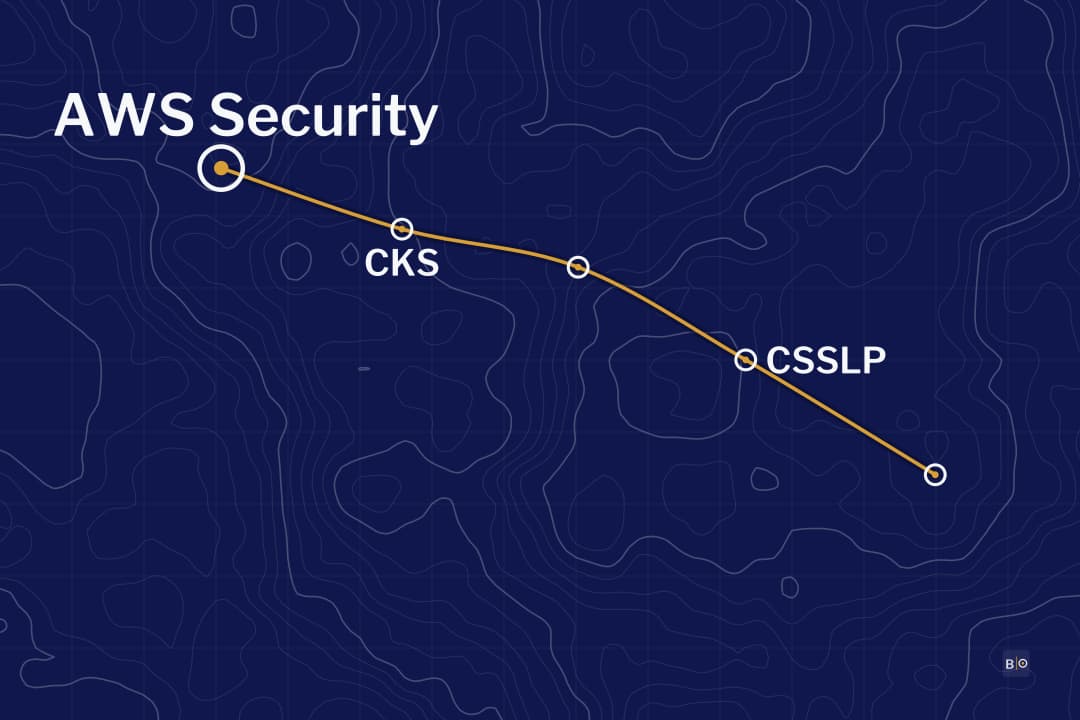
Choose CSSLP for the lifecycle and CKS for the cluster
CSSLP fits work that spans requirements, implementation, testing, deployment and software maintenance. ISC2 requires four years of qualifying experience, with a relevant degree able to satisfy up to one year. Someone already developing and testing secure software may have relevant experience without an AppSec title; ISC2 decides through endorsement.
CKS fits a Kubernetes environment where you operate the cluster and its security controls. The Linux Foundation requires a prior CKA pass and uses a command-line practical exam. It is a poor first purchase if you have never administered Kubernetes. Learn the cluster's ordinary behavior before trying to secure it under exam pressure.
Those credentials cover different layers. A developer maintaining dependency checks may have no need for CKS, while a platform engineer hardening cluster workloads may get little immediate value from a lifecycle knowledge exam. Choose the layer your team expects you to own and keep the other syllabus as a reference until the responsibility expands.
Add a provider credential when cloud permissions become the job
For AWS workloads, Security Specialty covers identity, logging, data protection and governance around the platform. For Microsoft environments, the cloud security engineering guide now covers SC-500 after AZ-500's retirement. Read the current provider objectives before purchasing material built around an older exam.
Use the learning on pipeline identities and deployment permissions. Separate the access needed to build from the access needed to release, and test what happens when a credential expires or is revoked. Record the recovery method so the service does not depend on one person's account staying active indefinitely.
The cloud engineering career path covers the wider platform role. A DevSecOps engineer does not need to collect credentials for every cloud provider before doing useful work. One environment with a working delivery process and tested controls gives you something specific to show the next employer.
Progress by making delivery safer to operate
The next assignment should increase the scope you can support: another service, a shared build component or a rollout used by several teams. Check whether a common control still fits those teams before declaring it a standard. A shared pipeline can spread a good security decision and can also spread an unexamined mistake.
Keep a change record that includes the reason for the control, its tests and what happened after rollout. Use ordinary engineering review to improve it. NIST's NICE descriptions for secure software development and infrastructure support are useful task references when the job title is too broad to explain the actual work.
We would prioritize a maintained pipeline and a clear account of its failure modes over several unrelated exams. The portfolio should show a release, a detected problem, a repair and a recovery exercise. That evidence lets an interviewer assess the skill the role needs: making security requirements part of a delivery process that people can keep using.
Sources
- NIST SSDF: secure development practices, checked October 2026
- SLSA specification: build integrity and provenance, checked October 2026
- Sigstore overview: software signing and verification, checked October 2026
- ISC2 CSSLP experience: experience and degree waiver, checked October 2026
- Linux Foundation CKS: practical exam and CKA prerequisite, checked October 2026
- AWS Security Specialty: platform security scope, checked October 2026
- Microsoft Cloud and AI Security Engineer: SC-500 certification, checked October 2026
- NICE Secure Software Development: development tasks, checked October 2026
- NICE Infrastructure Support: platform operations tasks, checked October 2026