An energy company can hire security staff to protect office systems, monitor a control network or manage evidence for an electric reliability obligation. Those jobs overlap without being interchangeable. Start by choosing the systems and decisions you want to own. Then use general security credentials for the shared foundation and industrial study for the operational responsibilities that an ordinary IT lab leaves out.
Separate enterprise systems from the process they support
A business application and a control system can both depend on identity, networks and remote access. Their consequences of failure may differ. NIST's operational technology guidance explains the importance of performance, reliability and safety constraints in these environments. Learn those constraints before proposing that a familiar IT control can be deployed without adjustment.
In a target vacancy, identify the asset boundary. A corporate security operations role may monitor common enterprise platforms. A plant role may require working with engineering owners and equipment suppliers. A reliability compliance role may focus on the scope and evidence for particular electric systems. Oil, gas, electricity and other energy operations should not be treated as one regulatory category.
Use the NICE Workforce Framework to identify the transferable task: incident response, infrastructure support, architecture or control assessment. Add the industrial context explicitly. A work-role description can help organize learning, but it does not authorize you to change a production process.
Establish an IT foundation without assuming it is enough
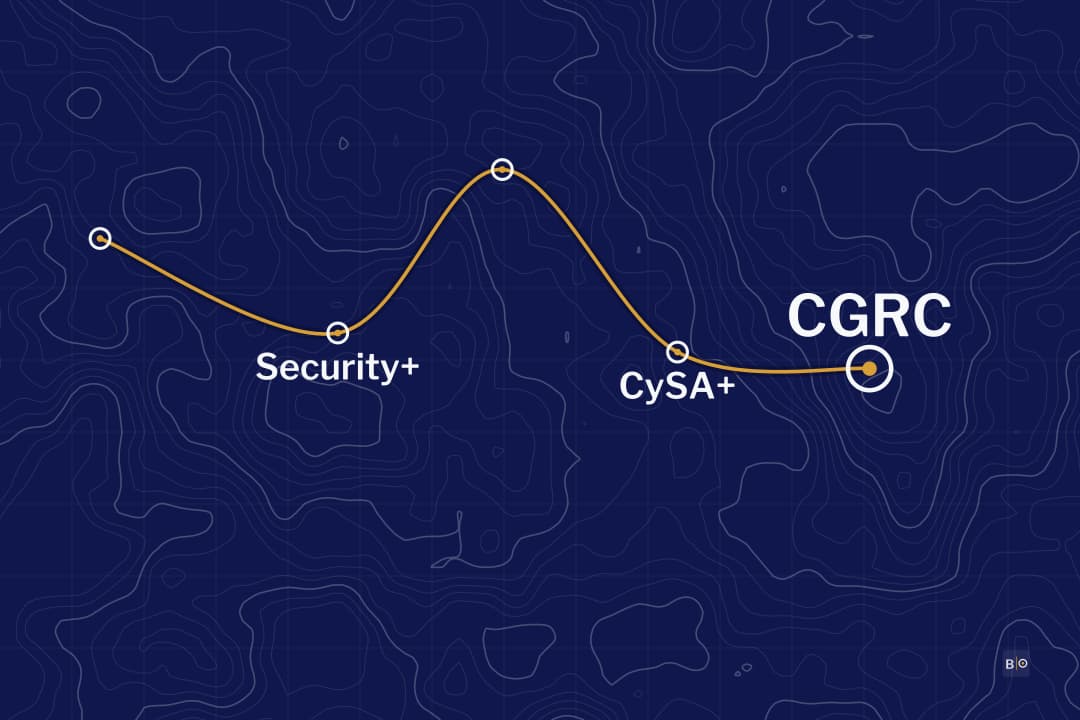
Security+ is a possible starting point when you need structured coverage of general controls. Pair it with networking and operating system practice. Be able to explain administrative access, logging and recovery on a small system you understand before adding equipment whose behavior you cannot yet interpret.
If you already administer enterprise infrastructure, document the parts of that experience that transfer: privileged access, asset records, backup testing and controlled change. Then identify what requires further study. A process owner may need to approve a maintenance window that an office application team would handle differently.
In a lab, practise producing a readable record of a change. State the intended effect, the owner, the verification check and the rollback condition. This is a suggested way to demonstrate reasoning. It is not a claim that a lab change procedure satisfies an energy operator's production requirements.
Study OT from the current published guidance
NIST SP 800-82 Revision 3 is a published guide to operational technology security. Its examples provide a more useful starting point than treating every device as an ordinary server. NIST also lists an initial public draft of Revision 4. A draft should be labelled as a draft when you discuss it; it has not silently replaced the final publication.
Work through an architecture using synthetic devices and data. Show where administrative access enters, where monitoring occurs and how an operator can continue or recover the process if a supporting system fails. Identify assumptions that require the engineering team to confirm. A clear unanswered question is preferable to a confident control recommendation built on a false process model.
The GIAC Global Industrial Cyber Security Professional, or GICSP, is a real industrial security credential. GIAC positions it across the IT, engineering and cybersecurity knowledge needed for industrial control systems. Review its published objectives against your intended role before choosing the associated study. It does not grant authority to operate a plant or sign off every engineering decision.
Keep reliability compliance within its actual scope
The Federal Energy Regulatory Commission's electric reliability work includes mandatory reliability standards developed by NERC and approved by FERC. Cybersecurity requirements in that setting concern applicable bulk power system responsibilities. Do not assume that every energy employer or every device at an electric company falls under the same requirement.
For a compliance-oriented position, learn how the organization determines applicability and gathers evidence. Ask who maintains the asset scope, who approves interpretations and how a control failure becomes a corrective action. Keep legal and regulatory interpretation with the appropriate owners rather than assuming a certification supplies that authority.
CGRC, formerly CAP, can support a route focused on governance and control assessment. Its framework-based coverage is useful preparation for structured evidence work, but it is not a personal certificate of NERC compliance. The GRC specialist track gives a broader route into risk and assurance responsibilities.
Build an investigation that respects operations
CySA+ is relevant to analyst work. Use it alongside a case that shows how you evaluate an event and communicate its limits. A packet capture or log entry can establish that something happened; it may not establish the operational consequence without further information from the process owner.
Practise writing a containment proposal that names the affected asset, expected benefit and possible service impact. Show the evidence supporting the recommendation and the approval you would need. Do not rehearse active scanning or exploitation on a live industrial network without the operator's explicit authorization and procedures.
A useful portfolio can use a fictional remote access incident. Include an inventory excerpt, a timeline and a proposed follow-up check. Avoid real plant diagrams or configuration files unless you have permission to disclose them. Removing a company name alone does not necessarily make an operational design safe to publish.
Choose the next stage by the responsibility you gain
Move toward industrial specialization when you can explain a system's purpose and the consequences of a proposed control. Move toward assurance when you can connect a requirement to evidence and explain the limits of the test. For architecture and broader security leadership, CISSP can be relevant once you meet ISC2's experience requirements.
Do not attach a fixed promotion timetable to this route. An operator, an engineering supplier and a corporate security team can offer very different opportunities to gain qualifying experience. At your next interview, ask which systems the role covers and which decisions remain with engineering. Choose your study around that answer, then bring evidence that you can work within the stated boundary.
Sources
- NIST OT security: operational constraints, published revision and draft successor notice, checked October 2026
- FERC cyber and grid security: electric reliability and cybersecurity context, checked October 2026
- GIAC GICSP: industrial security credential scope, checked October 2026
- NICE Framework: tasks and work roles, checked October 2026
- CompTIA Security+: general security foundation, checked October 2026
- CompTIA CySA+: analyst responsibilities, checked October 2026
- ISC2 CGRC: control assessment and governance credential, checked October 2026
- ISC2 CISSP experience: experienced practitioner qualification, checked October 2026