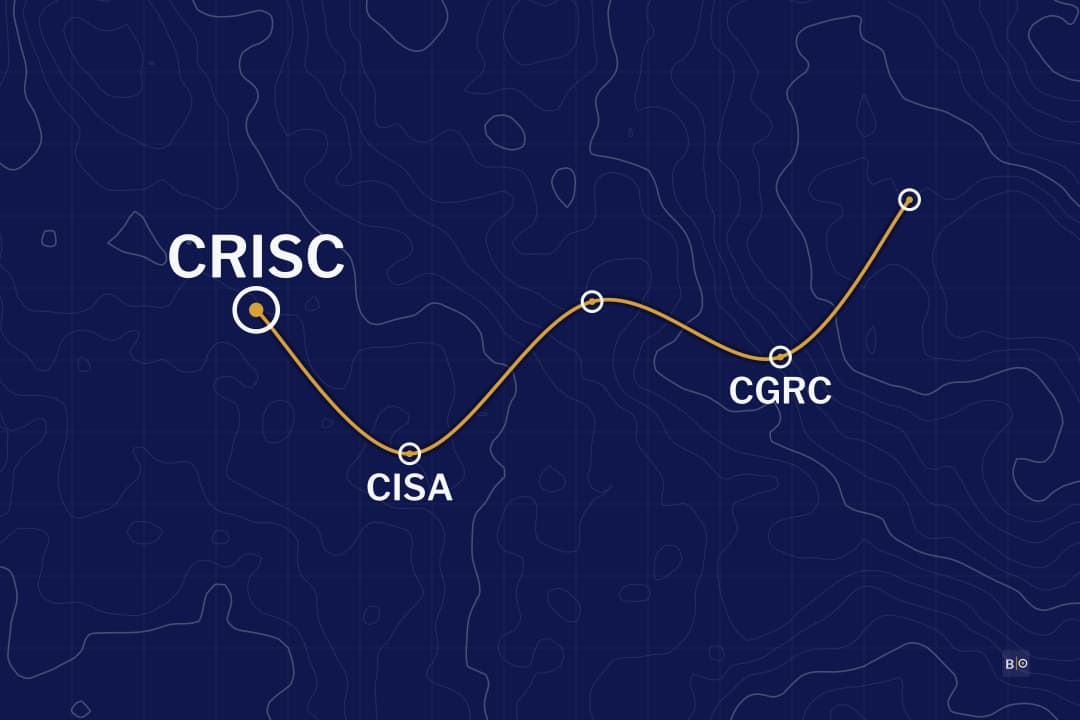
A GRC analyst can spend a week collecting screenshots and still be unable to say whether a control works. Progress comes when you can connect that evidence to a requirement, explain the risk that remains and get a decision from the person responsible for it. Governance, risk and compliance covers several kinds of work, so the certification route should branch with the job instead of climbing one universal ladder.
Start with a control you can explain end to end
Choose a control your organization already tests, such as removing access after someone leaves. Identify the requirement, the system boundary, the person who operates the process and the evidence that shows it happened. A policy statement is evidence of intent; it does not establish that every relevant account was disabled on time.
Ask the operator to walk you through the process. Follow a normal case and an exception, then write a test that another analyst could repeat. Distinguish a missing record from a failed control. A team can have a documentation problem without the underlying process failing, and the opposite can also be true.
NIST's Cybersecurity Framework 2.0 organizes cybersecurity outcomes in a way that connects governance with operational work. Use it to explain why the evidence matters to the organization. Avoid assigning maturity or compliance scores from your own invented scale. If your employer uses a formal assessment method, learn its definitions and record the limits of your conclusion.
Choose the first branch: authorization or audit
CGRC, formerly CAP, fits work that takes an information system through authorization and continued compliance. ISC2's outline covers scoping, choosing and implementing controls, assessment, compliance decisions and maintenance. It requires two years of qualifying experience. Passing without it can lead to Associate of ISC2 status, with three years to gain the required experience.
That route suits an analyst helping with a system security plan, assessment evidence and a Plan of Action and Milestones. It can be especially relevant to federal authorization work, but the outline also names frameworks beyond that setting. Use the current CGRC name when discussing the credential with employers.
CISA fits an analyst who wants to assess systems and controls with the independence of an auditor. ISACA permits candidates to take the exam before meeting the certification experience requirements. Read its current application rules before assuming that every year spent collecting compliance evidence qualifies. The CISA and CGRC comparison explains where the two jobs diverge.
Move from evidence to a defensible finding
The next stage is owning an assessment result. State the condition observed, the requirement it was tested against, the scope of the sample and the consequence. Give the operator an opportunity to correct factual errors before the report reaches management. That review should improve accuracy without allowing the owner to remove a supported finding merely because it is inconvenient.
A remediation needs more than a due date. Name the responsible owner, the proposed change and the evidence that will demonstrate completion. If the organization accepts the risk, record who has authority to make that decision and when it will be reviewed. A closed ticket can represent a repair, a compensating control or an accepted exposure; keep those outcomes distinct.
You are ready for broader responsibility when you can defend the finding to both the engineer and the risk owner. The engineer should recognize the system you assessed. The owner should understand what could happen and what the proposed treatment changes. That is a stronger readiness test than the number of policies you have edited.
Add CRISC when the work becomes risk assessment and response
CRISC belongs at the point where you are building risk scenarios, evaluating responses and reporting the residual exposure. ISACA's September 2026 support policy requires candidates who passed after the November 2025 change to document three years of work covering both Risk Assessment and Risk Response and Reporting, with no waivers. Earlier exam passers have a different domain rule, so check the application for your exam date. The experience requirement makes it a later credential for many analysts, even though the exam can be taken earlier.
Use an actual recurring issue as the study project. An unsupported application, for example, may create a technical exposure but also serve a business process that cannot move immediately. Compare repair, replacement, isolation and acceptance. State the assumptions behind the impact assessment rather than presenting a precise financial loss you cannot support.
The risk register should preserve the decision and its review conditions. A manager looking at it later needs to know what changed: the exposure, the business dependency, the available treatment or the organization's tolerance. If the register simply repeats last quarter's status, owning it has not yet become risk management.
Program ownership is a different promotion
A GRC manager coordinates work across teams. That includes allocating assessment effort, resolving ownership gaps and reporting issues that cross system boundaries. NIST's NICE role descriptions for cybersecurity policy and planning provide a useful reference for the work, but employers divide it differently. Read the responsibilities of a proposed role before deciding which credential it needs.
CISM fits responsibility for a security program and its governance, risk and incident-management activities. ISACA requires qualifying management experience, with a maximum two-year total allowance for experience substitutions. It does not turn general administrative work into management experience. Candidates starting this autumn should check the new exam outline taking effect on November 3, 2026.
A useful management project is coordinating the treatment of one repeated finding across several systems. Agree on ownership and funding, deal with exceptions, and show whether the change reduced the exposure. Our technical-to-CISO route covers the next move toward executive responsibility; it should not be treated as the inevitable destination for every GRC specialist.
Our view
We would take one credential for the current branch, then wait for the work to justify the next. CGRC followed by CRISC is a reasonable route from system assurance to enterprise risk. CISA followed by CISM can fit someone moving from audit into program management, although audit independence and management ownership must remain clear in the job itself. Someone who enjoys deep assessments can stay a specialist and become a better assessor without becoming a director. The audit certification guide gives that branch more room.
Sources
-
NIST Cybersecurity Framework: governance and risk outcomes, checked October 2026
-
ISC2 CGRC: credential and audience, checked October 2026
-
CGRC experience: two-year rule and Associate route, checked October 2026
-
ISACA CISA: audit credential and application process, checked October 2026
-
ISACA CRISC: risk credential, checked October 2026
-
ISACA Candidate Guide 2026: experience requirements and CISM cap, checked October 2026
-
ISACA CISM: management credential and new-outline date, checked October 2026
-
NICE Cybersecurity Policy and Planning: policy and planning responsibilities, checked October 2026
-
ISACA CRISC certification requirements: experience requirements for the current exam route, checked October 2026
-
ISACA CRISC experience policy: September 2026 policy distinguishing experience requirements by exam date, checked October 2026