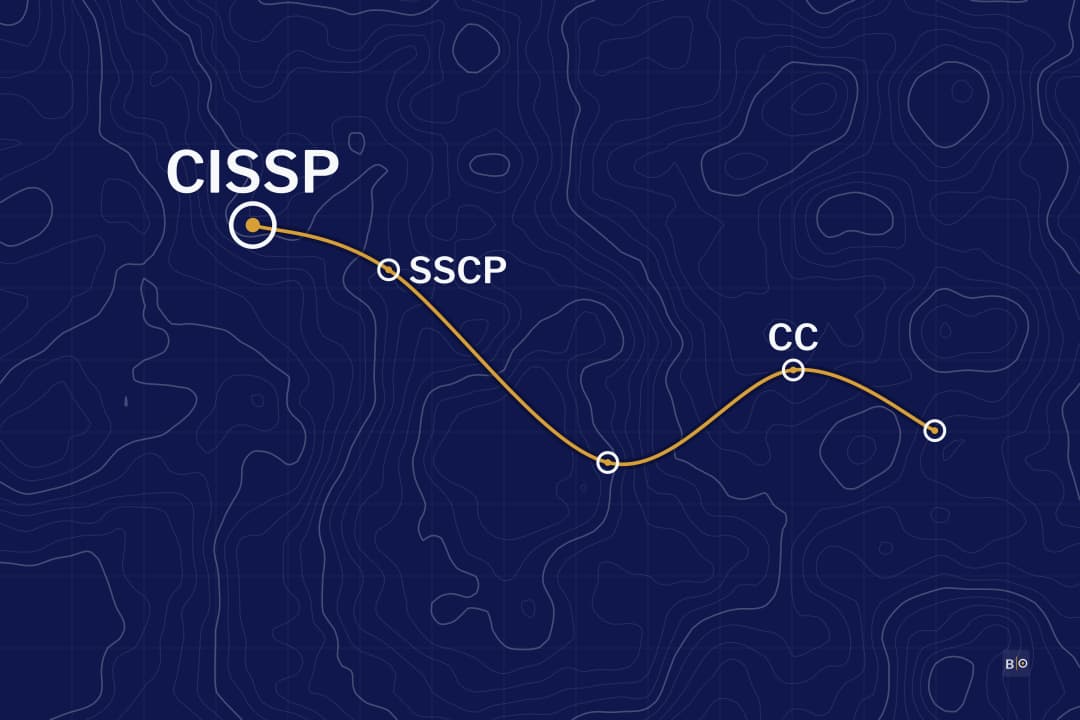
ISC2's certifications describe different kinds of work, and you do not have to earn them in order. CC can be a starting point for someone learning security; SSCP fits operating systems and controls; CISSP asks for broader professional experience. Your next step depends on which work you can document and which responsibilities you want next. Buying every exam adds expense without necessarily adding useful evidence.
Choose an entry point you can use
CC has no work experience requirement. Its current outline includes security principles, governance, access management, networks and security operations. Use it if you need a structured introduction before applying for junior work. Pair the reading with something you can explain in an interview, such as an account review or a short investigation of authentication logs.
The free offer has changed. ISC2 closed new enrollments in One Million Certified in Cybersecurity on May 20, 2026. Holders of unexpired issued codes can still sit the exam by December 31, 2026; new candidates use the paid route, listed at US$199. CC also carries a maintenance fee, so a free exam code never meant free membership indefinitely.
An experienced administrator should compare CC against SSCP. ISC2 requires a year of qualifying work in at least one SSCP domain, or an accepted degree under its education pathway. A job title alone does not establish eligibility. Read the experience page and map the work you actually did: administration, access controls, monitoring or incident handling.
We would choose SSCP if those tasks already describe your job. Someone who is still learning the meaning of those controls has more reason to start with CC. The CC and SSCP comparison covers the exam choice in more detail.
Use experience records to plan CISSP
CISSP requires five years of qualifying cumulative experience across at least two of its domains. ISC2 permits a one-year waiver through an eligible degree or a credential on its approved list. You cannot stack several such credentials to keep reducing the requirement. SSCP is on the list; CC is not.
That makes SSCP followed by CISSP a possible sequence for an administrator, but not a promise that time automatically qualifies. With the waiver, you still need four qualifying years in total and coverage of the required domains. Keep records of responsibilities, dates and people able to verify your work. Read the current rules for part-time work and internships before assuming every calendar month counts the same way.
Use the CISSP outline as a check on breadth. If your work is entirely endpoint administration, identify what experience would add a second domain through genuine responsibility. That might be helping assess a system design or participating in a continuity exercise. Discuss an appropriate assignment with your manager; an exam study plan cannot replace professional work.
The CISSP study guide explains the assessment itself. Passing the exam and becoming certified are separate steps, with experience and endorsement still to complete.
Passing early means Associate of ISC2
You can take an eligible experience-based exam before meeting its experience requirement and apply for the Associate of ISC2 designation. It gives you a defined period to gain the missing work. ISC2 allows six years after the CISSP exam, two after SSCP, three after CGRC and five after CSSLP. Choose that route only after checking the deadline attached to your exam.
The designation is Associate of ISC2. It is not a certification called CISSP Associate. ISC2's member policies restrict how Associates describe their status, so use the permitted designation on a résumé and avoid implying you already hold the full credential. Employers can have different requirements for a role that explicitly calls for a certified CISSP.
We would usually recommend qualifying work before an advanced exam if you have no clear route to that work. Sitting early can suit someone already moving into a relevant assignment and wanting a structured syllabus. It creates a deadline and ongoing maintenance obligations, however, so compare it with an entry credential you can actually hold now.
Specialize when your job calls for it
CCSP focuses on cloud security. ISC2 asks for five years in IT, including three in cybersecurity and one in a CCSP domain. An active CISSP replaces the entire experience requirement; other allowed substitutions are more limited. That makes CISSP then CCSP convenient for a generalist moving into cloud work. A cloud practitioner who already qualifies can go directly to CCSP instead.
CSSLP fits the secure software lifecycle. Its experience rule is four years across one or more domains, with an eligible degree able to replace a year. A developer responsible for security requirements and software assurance may find this a more useful first advanced credential than a broad management-oriented route. Match the outline to development responsibilities before buying training.
CGRC, formerly CAP, covers governance, risk and compliance work and requires two years of relevant experience. It belongs on a route toward control assessment and authorization work. It is not a required stop between SSCP and CISSP. Our GRC specialist track covers that direction.
Budget for maintenance as well as the exam
ISC2's fee page lists US$50 a year for CC-only holders and Associates, and US$135 for holders of its other certifications. The higher annual maintenance fee covers multiple ISC2 certifications; it is not charged once per credential. Continuing professional education requirements still depend on what you hold, and activities must meet the applicable policy.
Before adding another credential, identify how you will keep it current through your actual work and learning. Save course descriptions and attendance evidence when you earn credits. Related activity can sometimes serve more than one certification, but you must check its relevance and the reporting rules.
We would buy the smallest sequence that supports the next job: CC for a foundation, SSCP for operational responsibility, then CISSP when the work has broadened. A software engineer or cloud specialist can take a different branch. Review the route when your responsibilities change rather than treating the catalog as a checklist.
Sources
- ISC2 certification portfolio: role focus and independent certification choices, checked October 2026
- ISC2 CC exam outline: current foundational scope, checked October 2026
- ISC2 One Million Certified in Cybersecurity: closure, issued-code deadline and exam price, checked October 2026
- ISC2 SSCP experience requirements: year of experience and degree pathway, checked October 2026
- ISC2 CISSP experience requirements: experience, waiver cap and approved list, checked October 2026
- ISC2 CISSP exam outline: domain breadth, checked October 2026
- Associate of ISC2: eligible exams and experience deadlines, checked October 2026
- ISC2 member policies: Associate designation and maintenance rules, checked October 2026
- ISC2 CCSP experience requirements: cloud experience and CISSP substitution, checked October 2026
- ISC2 CSSLP experience requirements: software experience and degree substitution, checked October 2026
- ISC2 CGRC experience requirements: two-year experience rule, checked October 2026
- ISC2 annual maintenance fees: fees and single payment for multiple credentials, checked October 2026