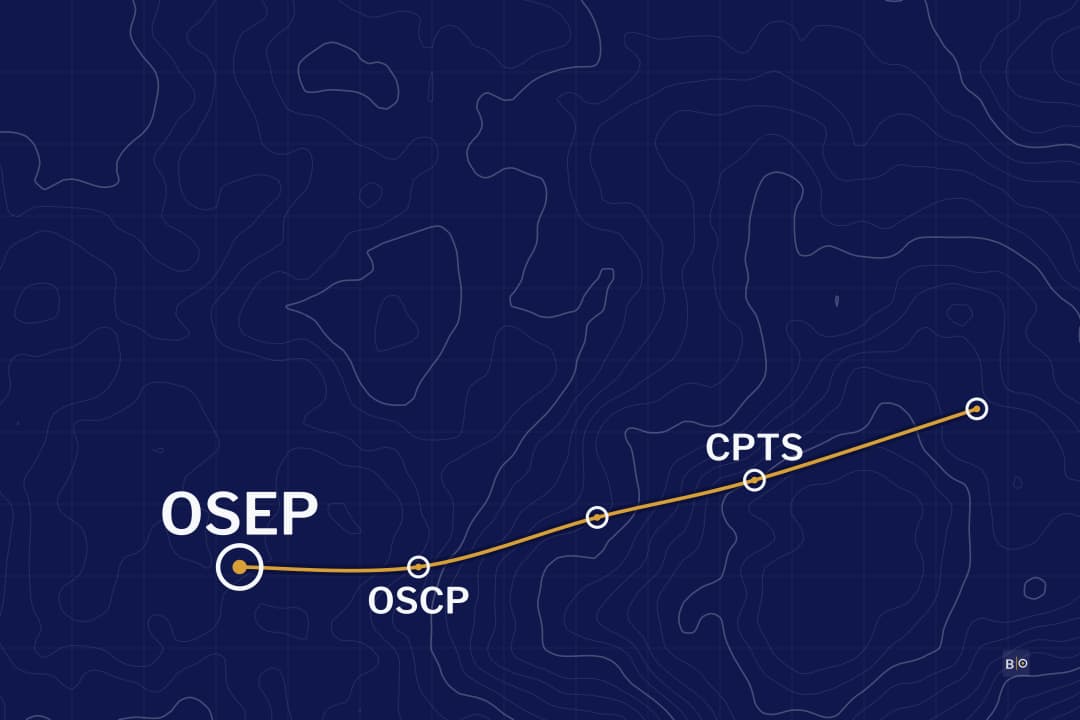
The first promotion in penetration testing should follow an engagement someone else can reproduce from your report. Later responsibility comes from scoping the assessment, reviewing other testers' work and explaining the remaining risk to a client. More difficult exploits are part of that progression, but they do not cover the whole job. Choose certifications for the part of the next engagement you cannot yet handle independently.
Learn the assessment before chasing a harder exploit
NIST SP 800-115 describes technical testing as a process that includes planning, conducting tests, analyzing findings and developing mitigation strategies. Its value to a new tester is the attention it gives the work around the tools. An assessment needs permission, scope, a method and a report before an exploit becomes useful evidence.
Use an authorized lab to practise that whole process. Write a short scope statement, identify permitted targets and methods, keep an activity log, and deliver findings with reproduction steps. Include a limitation when you could not test something. Calling a service secure because you ran out of time is a reporting failure even when the rest of the technical work is good.
For a first paid engagement, ask to work with a reviewer who will examine your notes as well as the final report. Learn which screenshots prove the claim and which merely show a tool running. You are ready for more independent work when a reviewer can verify a finding without asking you to reconstruct a command you forgot to save.
Choose the first practical exam around the report
HTB CPTS builds a course and engagement-style exam together. Hack The Box requires completion of its Penetration Tester path before the exam, which includes a written report. Its official subscriptions page lists the standalone voucher at $210. The mandatory path is useful for a learner who needs structure, and less attractive to someone already doing the same work daily.
OSCP is another practical route, with a shorter exam window and strict documentation rules. OffSec's current exam guide describes standalone machines and an Active Directory set, followed by a report. It requires screenshots and enough detail to reproduce the compromise. If a job specification names OSCP, that requirement may settle the choice before the differences in teaching do.
Both credentials belong beside actual assessment evidence. Keep a sanitized lab report you can share lawfully, and describe what you would change when moving from the exam to a client environment. Client systems may have availability constraints or excluded services that a training lab does not. Our CPTS and OSCP comparison weighs the two exams directly.
Own a complete engagement before specializing
An independent tester should be able to turn an agreed objective into a workable assessment plan. That includes asking what the customer most needs to learn, checking access and test accounts, identifying fragile systems and agreeing escalation contacts. If the client cannot authorize a proposed action, change the plan before the testing starts.
During execution, keep track of coverage as carefully as findings. An excellent exploit against one host does not answer whether the rest of the agreed environment was assessed. Record what you tested, what blocked the work and which conclusions depend on incomplete visibility. A senior reviewer should be able to distinguish a negative result from an untested area.
The readiness marker is a delivered engagement that stays understandable after you leave it. A client engineer can reproduce the important findings, a risk owner understands the consequence, and the retest has a clear acceptance condition. At this stage another beginner credential adds less than learning to run the engagement without someone rescuing the scope or report.
Pick a specialist direction the work will use
For internal networks with stronger endpoint controls, OSEP is OffSec's next relevant step. Its PEN-300 course covers evasion and breaching defenses, and assumes the foundation taught in PEN-200 or equivalent skills. Treat it as preparation for assessments against more defended environments, not as an automatic promotion after OSCP.
For application work where source code is available, OSWE takes a different direction. OffSec's WEB-300 course and practical exam focus on finding and exploiting application flaws through code analysis. A tester who spends most engagements on APIs and web applications may get more from that specialization than from deeper Windows tradecraft.
Choose one direction for a reason you can state to a manager: the team has code-assisted application engagements coming, or internal assessments increasingly involve modern endpoint defenses. Then arrange supervised work that uses the material. Buying both courses before you know which service line you want makes an expensive substitute for deciding.
Leading means improving other testers' decisions
A lead starts contributing before testing begins. Review the statement of work for claims the team cannot deliver, make sure the skills on the engagement match the environment, and check that the communication plan reaches someone who can stop a harmful test. Technical depth matters here because it helps you recognize an assessment that looks simple on paper and will be difficult in practice.
Report review is a separate skill. Look for evidence that supports the severity, a remediation that fits the client's architecture and limitations that are visible where the conclusion depends on them. Ask the tester to explain a weak finding rather than silently rewriting it. The next engagement should benefit from the review too.
The NICE Framework's Vulnerability Analysis role is a useful task reference, but job titles such as principal and lead are employer-specific. Ask what changes with the title: delivery responsibility, technical review, sales support or people management. The consulting career path covers the client-facing side, while red team progression covers objective-led adversary exercises.
Keep the qualification current without collecting endlessly
Read the maintenance rules before the next purchase. OSCP itself remains valid indefinitely, while OSCP+ has an expiry and separate maintenance rules. OffSec distinguishes extending an existing certification from earning a new three-year certification through its recertification exam. CPTS does not have a published expiration date in its certification guide.
We would keep an engagement log with responsibilities, environments and lessons that can be shared without exposing client details. Use it to decide the next learning gap. A portfolio that shows better scope, evidence and review over time makes a stronger case for senior work than a sequence of exam passes with no change in responsibility.
Sources
- NIST technical testing guide: planning, execution, findings and mitigation, checked October 2026
- NICE Vulnerability Analysis: assessment-related tasks, checked October 2026
- HTB Academy subscriptions: CPTS voucher price, checked October 2026
- HTB CPTS: path and report-graded format, checked October 2026
- OffSec OSCP exam guide: exam structure and documentation, checked October 2026
- OffSec PEN-300: evasion course and audience, checked October 2026
- OffSec WEB-300: code-assisted application testing, checked October 2026
- OffSec maintenance handbook: OSCP+ maintenance distinction, checked October 2026