A useful security research result explains something another qualified person can reproduce. It may be a software flaw, a property of an attack or a finding about a malicious program. Choose that kind of result before choosing a certification. The route into application research, memory-corruption research and malware analysis shares a need for careful evidence, but the technical preparation differs enough that one certificate ladder would be misleading.
Start with a narrow question in an authorized environment
Pick software or data you are permitted to study. Define a question small enough to answer: whether an authorization check covers a second access path, why a program handles one input differently, or what a sample does in a controlled analysis environment. Record the version and conditions before changing anything.
NIST's NICE role descriptions for software security assessment and vulnerability analysis are useful task references. They describe work that can support research without promising that every researcher has the same job. A role in a product team may emphasize fixes and engineering review; a consulting role may emphasize assessments; a research organization may emphasize new methods and publications.
Make the first result understandable without a dramatic claim about its importance. State what you tested, what happened and what that supports. A negative result can still show a sound method if the question was useful and the limits are clear. The portfolio should demonstrate reasoning as well as persistence.
Build a reproduction that does not depend on your memory
Keep the original observation and the steps needed to reproduce it separate from the interpretation. Record configuration changes and prerequisites. If the result occurs only under one unusual setting, include that setting in the finding instead of describing the issue as universal.
Have someone else follow the reproduction in the same authorized environment. Their failure to reproduce it may reveal a missing condition or an assumption about state. Fix the record rather than dismissing the failed reproduction as user error. The review is part of establishing the result.
A useful research note also says what you have not established. Finding a crash does not by itself demonstrate practical code execution. Observing a suspicious network connection does not establish the entire purpose of a program. Describe the next test that would resolve the uncertainty and keep the final claim within the evidence you collected.
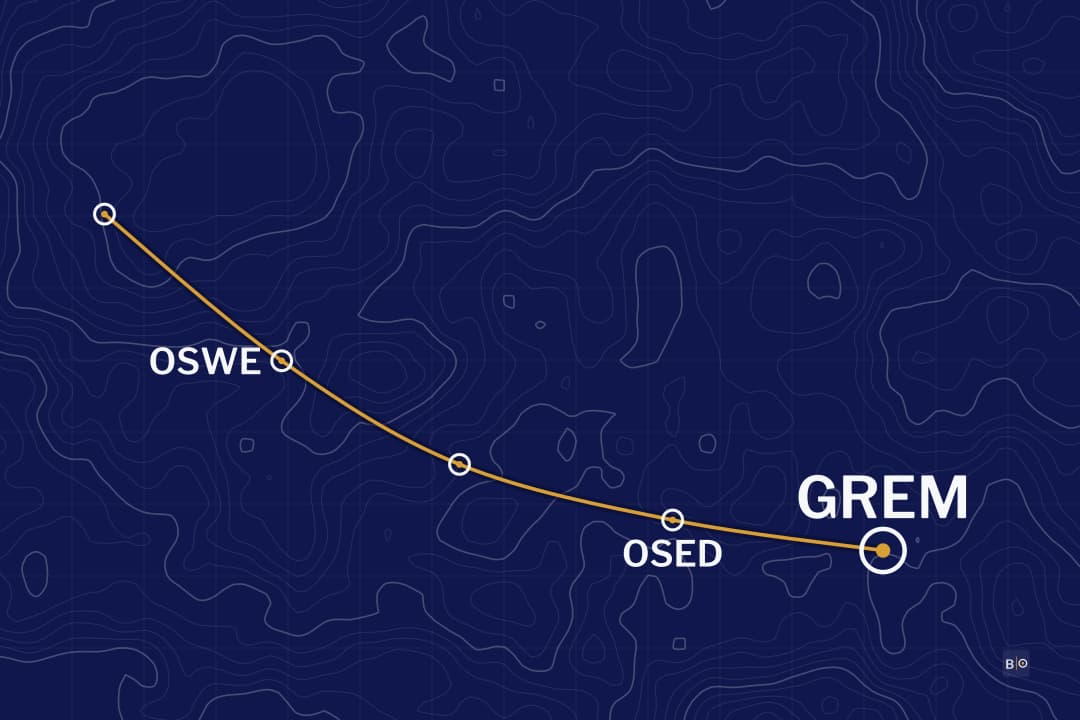
Choose OSWE for code-assisted application research
OSWE fits researchers who want to follow application logic through source code and build a working exploit chain. OffSec's WEB-300 course leads to a practical exam with reporting and scripted exploitation requirements. The credential tests a particular application-analysis skill set; it is not a general license to test systems you do not control.
Use the preparation to improve your own code reviews. Trace how user-controlled data reaches a sensitive operation, identify the relevant security checks and write a minimal demonstration in a safe environment. Then explain how an engineer could remove the underlying flaw rather than merely block your exact input.
The developer-to-AppSec route fits people who enjoy reviewing and fixing software inside a team. Research can be part of that job without requiring a separate researcher title. Choose OSWE when close code analysis is the gap your projects repeatedly expose, rather than simply because it is the next exam after an unrelated offensive credential.
Take the binary or malware branch for a different kind of evidence
OSED is OffSec's Windows exploit-development credential. Its EXP-301 course and practical exam cover reverse engineering, memory corruption and working around specified exploit mitigations. It fits a researcher drawn to debuggers and program internals. Build the programming and debugging foundations before paying for a timed course window.
GREM is GIAC's malware-analysis credential. Its objectives cover examining malicious programs and documents, including static and dynamic techniques. That branch asks what a program does and how to analyze it safely, which is related to vulnerability research but has a different immediate purpose.
Choose one branch for the next project. A web researcher does not need to buy OSED to prove general ambition, and a malware analyst does not need a web exploit credential before investigating a sample. Our forensics career guide covers the neighboring work of placing technical findings inside an incident record.
Learn the reporting process before publishing a finding
NIST SP 800-216 describes handling vulnerability reports and communicating remediation in a federal vulnerability-disclosure framework. Its scope is federal systems, but the distinction between receiving, assessing and communicating a finding is useful when reading any vendor's disclosure process. Follow the actual policy and authorization for the system you are studying.
For a vulnerability report, include the affected version, a reproducible explanation, the likely impact and the assumptions behind that impact. Use the vendor's stated reporting channel. Keep disclosure timing and the permission to share details explicit. A pseudonym or an anonymized target does not automatically make restricted information publishable.
If your route starts in bounty programs, our bounty-to-career guide explains the platform-specific disclosure constraints. For a portfolio, use your own lab work or findings you are permitted to disclose. A prospective employer should be able to review your methods without asking you to break an agreement with another organization.
Progress from a finding to a body of work
A senior researcher helps other people reason about uncertain results. Practise reviewing a reproduction, challenging an impact claim and suggesting a test that could disprove the current explanation. Keep the exchange focused on the evidence. The ability to abandon a weak claim is as useful as the ability to produce an impressive demonstration.
Look for roles whose outputs match the work you want to keep doing. Product teams need research that informs a fix and prevents recurrence. Other teams may value detection content, analysis tooling or public technical writing. Ask what happens to a result after it is found, and how the organization reviews it before acting.
We would choose a specialty, one demanding technical credential where it helps, and a small set of reproducible, shareable projects. There is no source-backed guarantee that a certain number of findings produces a research job. The evidence you can improve is the quality of the question, the reproduction and the explanation of why the result matters.
Sources
- NICE Software Security Assessment: code assessment tasks, checked October 2026
- NICE Vulnerability Analysis: vulnerability assessment tasks, checked October 2026
- NIST vulnerability disclosure guidelines: federal report handling and communication scope, checked October 2026
- OffSec WEB-300: OSWE scope, checked October 2026
- OffSec EXP-301: OSED scope, checked October 2026
- GIAC GREM: malware analysis objectives, checked October 2026
- HackerOne disclosure process: permission and coordinated disclosure, checked October 2026