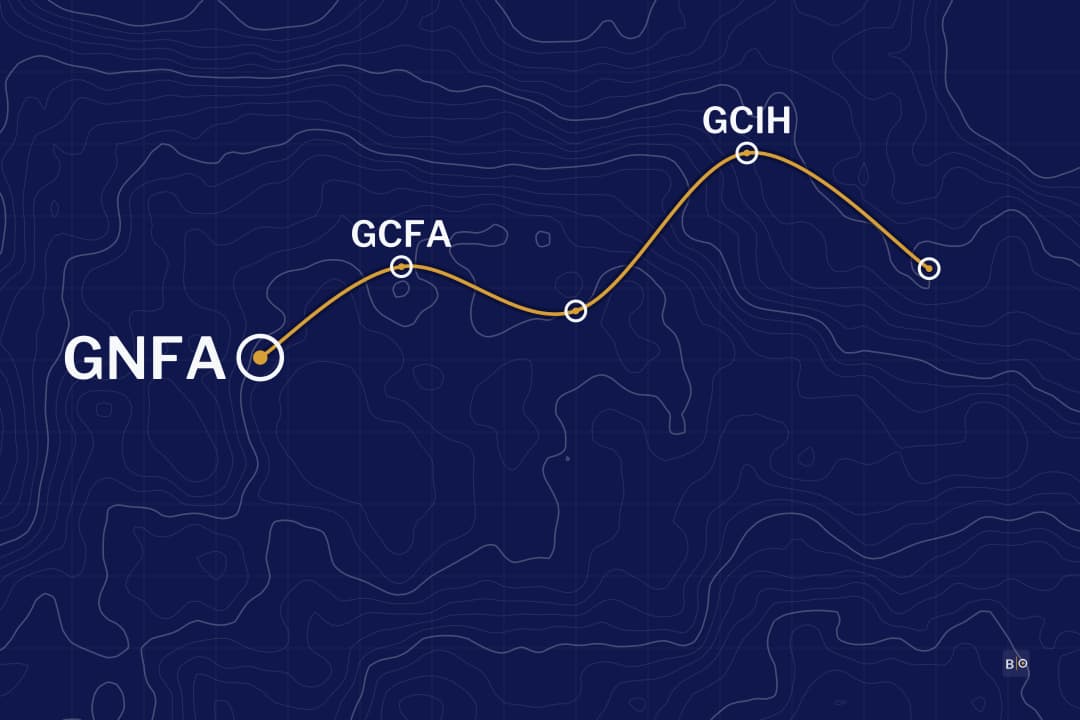
An incident responder needs to make a defensible decision before every fact is known. Start by building reliable timelines and preserving the evidence behind them, then take responsibility for containment and recovery with the right owners. Later you can specialize in forensic work or lead the response service. Those are different careers, and the certification sequence should make the branch visible.
Learn what the incident process expects from you
NIST SP 800-61 Revision 3, published in April 2025, replaces the earlier incident-handling guidance and connects response with cybersecurity risk management. Read the current publication before building a study plan around the older lifecycle diagram alone. Preparation, detection, response and recovery depend on decisions made across the organization.
NIST's NICE Incident Response role supplies a task reference for the technical work. FIRST's CSIRT Services Framework helps explain the service around it, including how event analysis feeds incident handling. A responder may sit in a SOC, a dedicated response team or a consultancy. Ask which decisions the role can make and which it must recommend to an owner.
For a first assignment, take responsibility for one investigation record under supervision. Record the source and timing of each observation, the conclusion it supports and the questions still open. The next responder should be able to tell the difference between an observed login and an assumption about who used the account.
Build a timeline before choosing a containment action
Use a safe lab case with identity and endpoint evidence. Normalize the timestamps, note collection gaps and connect events only when the evidence supports the link. Keep the original records available so a reviewer can check your interpretation. A diagram that looks complete can hide uncertainty more effectively than a written timeline does.
Then propose containment options. Disabling an account may stop malicious access and also interrupt a service. Isolating an endpoint may affect evidence collection or business operations. Identify who can authorize the action and which information they need to decide. Practise describing the uncertainty without burying the recommendation.
You are ready for more independent work when the reviewer can follow the evidence, understand the options and see why you recommended one. That readiness does not depend on having handled a particular number of incidents. The cases need to demonstrate a repeatable method and an honest account of what you could not establish.
Use GCIH to connect response with the attacks
GCIH is GIAC's incident-handling credential, but its published objectives devote much of their attention to attack techniques. It fits an analyst who needs to understand how an attacker obtained access and moved through systems. Read the objectives rather than assuming the name means a course devoted entirely to organizing a response team.
Use the syllabus to improve your case work. For each technique, ask which evidence would support its use, which source could distinguish it from normal activity and what a responder could safely change. An attack lab becomes more valuable to a responder when it produces an investigation plan as well as a successful compromise.
If you need practical evidence before an employer-funded GIAC course, the SOC progression guide discusses earlier investigation credentials. A certification pass should give you a stronger method to use on the next case. It does not confer authority to isolate production systems or handle evidence outside your employer's procedures.
Choose host or network forensics when the cases demand it
GCFA fits deeper host and memory investigation, including timelines and intrusion analysis. It is useful when your current investigations regularly stop because you cannot explain what happened on a compromised machine. Build the operating-system knowledge and evidence-handling habits alongside the exam preparation.
GNFA takes the network branch: packet captures, flow records, proxy logs and related evidence. Choose it when the network is where the unanswered questions remain. A case can need both host and network analysis, but that does not mean the same person should buy both courses immediately.
Our forensics career guide covers that technical branch in more depth. Work with a specialist on a real or authorized training case before choosing the next exam. Seeing which questions the specialist can answer will make the difference between the two syllabi more concrete than reading their titles.
Lead the response through recovery
A senior responder must know when containment has created the conditions for recovery. Write acceptance checks that address the original access path, affected identities and remaining uncertainty. A rebuilt server can be operational while the credential that compromised it remains active elsewhere. Bring the system owner into that decision.
Practise the handoff to business recovery and communications. State what is confirmed, what has been restored and what monitoring is still needed. Refer legal, regulatory and external-notification questions to the people authorized to resolve them. The response team supplies evidence and technical judgment within that wider process.
After the incident, turn findings into owned changes. A lesson about logging has little effect until someone funds and implements the missing source. Track the improvement through deployment and test whether a similar investigation would now be easier. That closes the connection NIST makes between incident response and continuing risk management.
Decide whether the next role is specialist or service lead
A forensic specialist can become more senior through deeper analysis and review without managing the whole team. A service lead takes responsibility for staffing, escalation arrangements, exercises and the working relationships that make response possible. Try leading an exercise or coordinating an improvement project before choosing the management branch.
CISM becomes relevant when your work includes managing the program. ISACA requires qualifying management experience; time spent investigating incidents does not automatically satisfy that requirement. The technical-to-CISO path covers the broader leadership route if you find you prefer those decisions.
We would keep the next learning goal close to a recurring weakness in your case work. Choose GCIH for attack understanding, GCFA or GNFA for an evidence problem, and management study for responsibility over the service. A good career record shows how the team made better decisions because of your work, including the point where you asked for specialist help.
Sources
- NIST incident response Revision 3: current risk-integrated response guidance, checked October 2026
- NICE Incident Response: response tasks, checked October 2026
- FIRST CSIRT Services Framework: service scope and handoffs, checked October 2026
- GIAC GCIH: attack and handling objectives, checked October 2026
- GIAC GCFA: host and memory analysis, checked October 2026
- GIAC GNFA: network evidence, checked October 2026
- ISACA CISM: management credential, checked October 2026