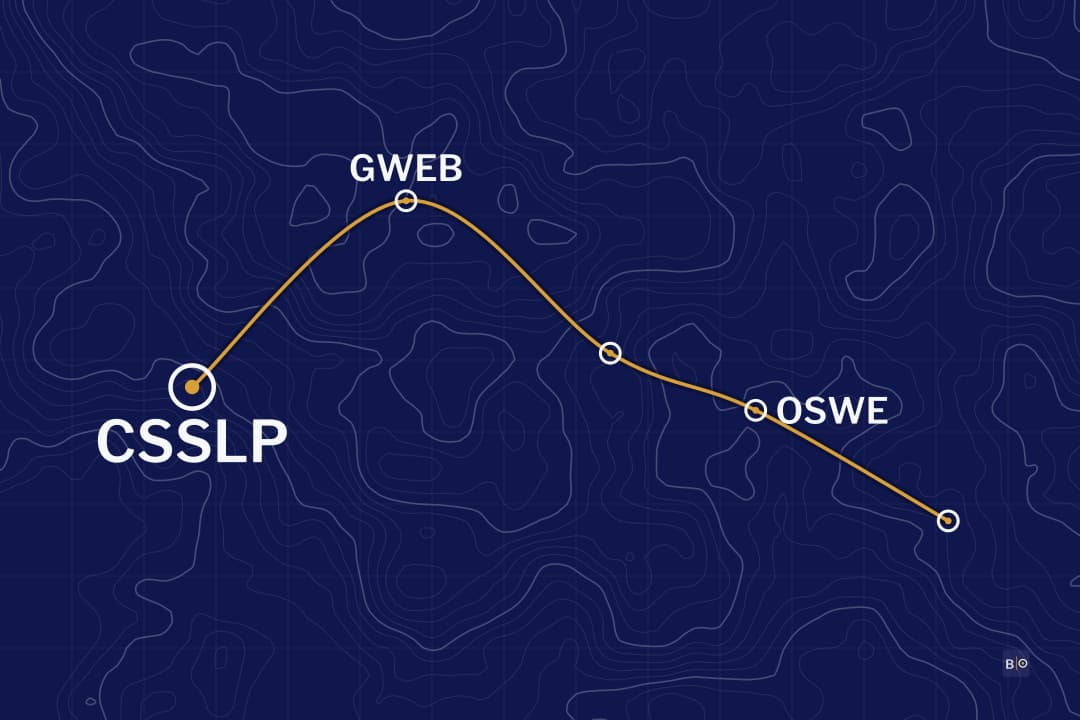
A product security engineer stays with the software after the assessment report is delivered. The work includes helping developers prevent defects, deciding how reported vulnerabilities are handled and checking whether a fix reaches supported releases. Start with a product you can understand well enough to review and repair. Later responsibility comes from making the same security decisions work across teams and releases.
Learn the product before prescribing a control
Choose a service you can examine with permission. Map the users, data, interfaces and the identities used by supporting services. Trace an ordinary request through the application and the systems it depends on. A security recommendation is easier to evaluate when you can explain which legitimate behavior it must preserve.
NIST's NICE Software Security Assessment and Secure Software Development roles describe parts of this work. Product security often combines them with coordination across engineering teams. Read a job description for its actual responsibilities: reviewing designs, testing software, handling external reports or operating a product security program.
For a first project, take one security requirement through implementation and a test. Access to a tenant's data is a useful example if your application has tenants, but use a requirement that fits the actual system. Record how the test would fail if the control were removed. That is more useful than attaching a scanner result to a ticket with no explanation.
Use ASVS for the application and SSDF for the process
OWASP's Application Security Verification Standard provides application security requirements. Use a relevant part of it to structure a review, then explain which requirements apply and why. A checklist entry without the system context can produce a formal pass that says little about the risk you meant to address.
NIST's Secure Software Development Framework addresses how security practices enter software development. Use it to examine the work around the code: how requirements are set, changes are reviewed, vulnerabilities are found and the team responds after release. ASVS and SSDF serve different scopes and can be used together.
Try the combination on one feature. Review its authentication or authorization behavior, add a regression test, and document where a similar requirement should be considered in future designs. Have the product team check whether the suggested process fits its delivery workflow. The purpose is a change the team can maintain, not a separate security ceremony for every release.
Choose OSWE or GWEB for the technical gap
OSWE is useful for engineers who need stronger source-code analysis and exploitation skills. OffSec's WEB-300 course leads to a practical exam with exploit scripting and reporting requirements. It fits a developer who wants to understand how several small weaknesses can become an exploitable chain.
GWEB is GIAC's defensive web application credential. Its objectives include application and API security subjects relevant to the people building and defending the product. Choose it when structured defensive study fills a gap and the course cost fits your budget or employer's training plan.
Neither credential establishes that you can run an entire product security function. Keep an engineering project beside the exam result: the flawed behavior, the evidence, the fix and the test that prevents recurrence. Our developer-to-AppSec route describes the transition from ordinary development work into that responsibility.
Learn vulnerability handling as a service
A product team also needs a way to receive and evaluate external reports. FIRST's PSIRT Services Framework describes services for a product security incident response team. Use it to understand the work around intake, analysis, coordination and communication rather than treating vulnerability handling as an inbox a developer checks when time allows.
NIST SP 800-216 provides vulnerability-disclosure guidance for federal systems. Its scope is specific, but its report-handling perspective is useful when comparing your own product's process with the policies it publishes. Follow the applicable organizational and legal requirements with the people responsible for them.
Practise with a hypothetical report about your own test product. Identify who can reproduce the issue, who decides the supported versions affected and how the reporter receives an update. Keep claims about impact and remediation tied to evidence. If the team cannot answer which customers need a fix, the technical patch is only part of the unfinished work.
Add CSSLP when responsibility crosses the lifecycle
CSSLP fits engineers who work across security requirements, design, implementation, testing, release and maintenance. ISC2 requires four years of qualifying experience, with a relevant degree able to replace up to one year. Secure development work can be relevant even when the title on the employment record does not say security.
Study the outline against your current product process. Identify which parts you have performed and which you have only observed. Ask to own a bounded improvement in a gap, such as security requirements for a shared component or the way supported branches receive a fix.
CSSLP is a knowledge credential, so use that project to show application of the material. A hiring manager should be able to see how the process changed, which team accepted it and what evidence now exists. The DevSecOps career route is the neighboring path for engineers who prefer building the delivery controls that support those decisions.
Progress by reducing recurring defects
The next stage is looking across findings. Group issues by root cause and ask what would prevent the next occurrence: a safer component, a clearer API contract, a design review or a test that belongs in the shared pipeline. Do not count closed tickets as a complete measure of success if the same defect keeps returning under a different name.
Work with engineering owners to choose the intervention and review its effect. A secure default that removes a dangerous option can be more durable than asking every team to remember another checklist item. Keep a way to handle exceptions where the product genuinely needs a different behavior.
We would choose one technical credential, then CSSLP only when the lifecycle responsibility becomes real. A product security specialist can remain hands-on while influencing many teams. The security researcher route fits the branch focused on finding new technical results; this route stays accountable for what happens to the product after the finding.
Sources
- NICE Software Security Assessment: assessment responsibilities, checked October 2026
- NICE Secure Software Development: development responsibilities, checked October 2026
- OWASP ASVS: application requirements, checked October 2026
- NIST SSDF: secure development lifecycle, checked October 2026
- FIRST PSIRT Services Framework: product vulnerability service, checked October 2026
- NIST vulnerability disclosure: federal report-handling scope, checked October 2026
- OffSec WEB-300: OSWE scope, checked October 2026
- GIAC GWEB: defensive application scope, checked October 2026
- ISC2 CSSLP experience: experience and degree alternative, checked October 2026