Security automation turns an analyst's decision into software other people depend on. The first useful project is usually a modest workflow with clear inputs and an inspectable result, such as adding context to an incident. Learn the API and identity work behind it, test failure cases and arrange operational ownership. Credentials become useful when they deepen the platform or software-lifecycle responsibility you have actually taken on.
Start with an analyst task you understand
Watch an analyst perform a repetitive task and record the decisions hidden inside it. Looking up an asset owner may sound mechanical until several records disagree. Closing an alert may depend on a judgment that the ticket does not capture. Automate the part whose rules you can state, and preserve human review for the rest.
NIST's NICE descriptions for secure software development, infrastructure support and defensive analysis help identify the skill mix. An automation engineer writes code, works with operational systems and needs to understand the analyst's purpose. The job title alone does not tell you whether the employer expects platform administration, integration development or response engineering.
For a first project, enrich a test incident with a documented source of context and record where the information came from. Keep the workflow read-only until you understand its behavior. The analyst should be able to check the evidence without trusting the automation's conclusion on authority.
Treat the workflow identity as part of the design
List the APIs the workflow calls and the access each call needs. Use an identity the organization can own, review and revoke rather than relying on a developer's personal account. Document how access is approved and how the workflow is recovered if its credential stops working.
Test a permission failure deliberately. The system should make the missing access visible without dumping secrets into a log. A successful development run can hide the fact that your own account had far broader access than the eventual service identity will receive.
The cloud security engineering path covers those platform foundations. They matter even when a low-code interface generates much of the workflow. A graphical connector still has an identity, an authorization boundary and data-handling responsibilities. Review those parts with the same care as code you wrote yourself.
Test retries, duplicates and incomplete data
Build a small set of representative test inputs. Include a normal case, a missing field, an unavailable dependency and the same incident delivered twice. Decide which failures can be retried and which need an operator's review. Keep the decision visible in the workflow and its operating notes.
For an action that changes a system, establish how repeated execution behaves. A duplicate event should not repeatedly disable and re-enable an account or create a fresh ticket every time a request times out. Record the action and its outcome so the operator can distinguish an unfinished request from one that succeeded before the response was lost.
NIST's Secure Software Development Framework provides a lifecycle reference for the software behind the workflow. Use ordinary version control, review and testing. A useful portfolio shows the failed cases and the repair, rather than only a screen recording of a successful demonstration.
Choose SC-200 for a Microsoft response workflow
Microsoft Sentinel playbooks use Azure Logic Apps to automate response actions and can be invoked through automation rules or manually in supported contexts. Microsoft's documentation distinguishes the roles required to create, attach and run those playbooks. Read the current permissions guidance before treating a portal button as proof that an action is authorized.
SC-200 gives a relevant platform syllabus for Sentinel and Defender security operations. Its English exam updates on October 21, 2026. Use the current skills list and build a practice workflow around an investigation you can explain, including what the automation adds to the analyst's decision.
Keep the platform costs in view. Microsoft notes that Logic Apps can add charges; a training demonstration does not establish what a production workload will cost. Estimate from the actual execution pattern and approved pricing model with the service owner. The SOC progression guide describes the investigation work the workflow is meant to support.
Add a cloud or lifecycle credential for the next layer
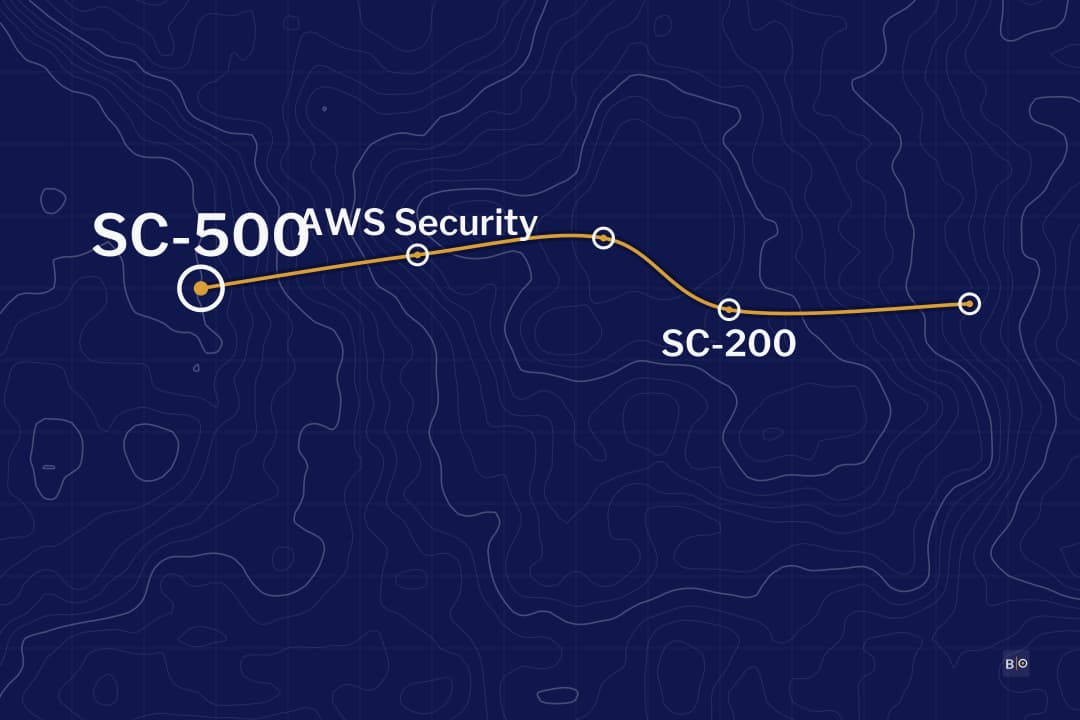
AWS Security Specialty can deepen the identity, logging and data-protection knowledge needed around AWS automation. In Microsoft environments, the SC-500 route covers current cloud and AI security engineering after AZ-500's retirement. Choose a provider exam when those platform decisions are part of the service you maintain.
CSSLP fits broader responsibility for security across the software lifecycle. ISC2 requires four years of qualifying experience, with a relevant degree able to replace up to one year. The credential becomes more relevant when you are setting requirements, reviewing implementations and maintaining shared automation beyond one integration.
The DevSecOps career path is the neighboring route for engineers who prefer build and release controls. There is overlap in testing and identity, but the consumer differs: a delivery pipeline supports software teams, while a response workflow supports analysts and system owners making incident decisions.
Move from a demonstration to an operated service
Before enabling the workflow broadly, agree on its owner, monitoring and stop mechanism. Keep a manual alternative for the task while the automation is unavailable. Test the process for disabling a faulty release and restoring the previous version. The operating team should not need the original developer online to stop harm.
Use a staged rollout with the service owner's approval. Inspect real failures and compare the output with what an analyst would have done. If a data source changes its format, make the failure apparent. Silent partial success is difficult to diagnose when the analyst assumes every field was checked.
We would judge readiness by a workflow another engineer can review and operate, including its failures. Keep one platform credential if it helps explain the environment, and add another only when responsibility expands. A maintained integration with clear permissions and recovery is stronger evidence of engineering skill than several unattended scripts whose owner has moved on.
Sources
- NICE Secure Software Development: software engineering tasks, checked October 2026
- NICE Infrastructure Support: operational responsibilities, checked October 2026
- NIST SSDF: secure software lifecycle, checked October 2026
- Microsoft Sentinel playbooks: Logic Apps, permissions, invocation and charges, checked October 2026
- Microsoft SC-200 study guide: current platform scope and update, checked October 2026
- AWS Security Specialty: platform scope, checked October 2026
- Microsoft Cloud and AI Security Engineer: current SC-500 route, checked October 2026
- ISC2 CSSLP experience: lifecycle experience and degree waiver, checked October 2026